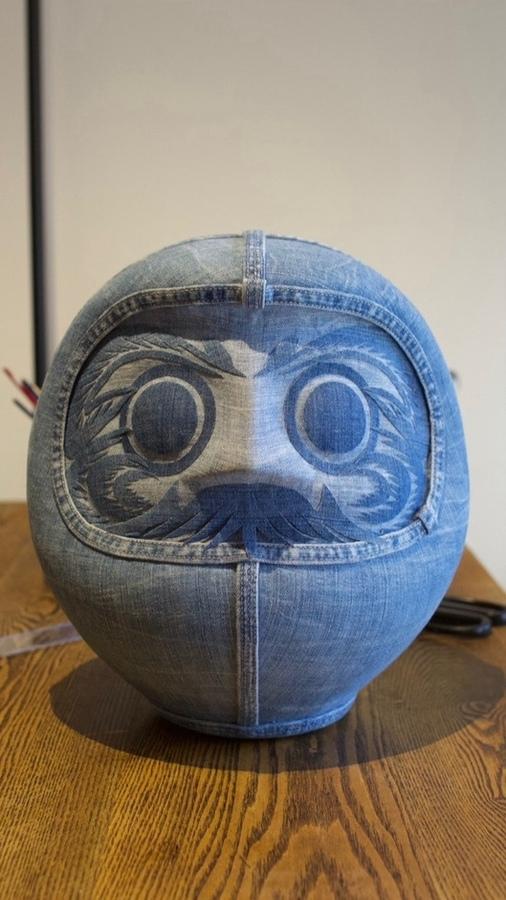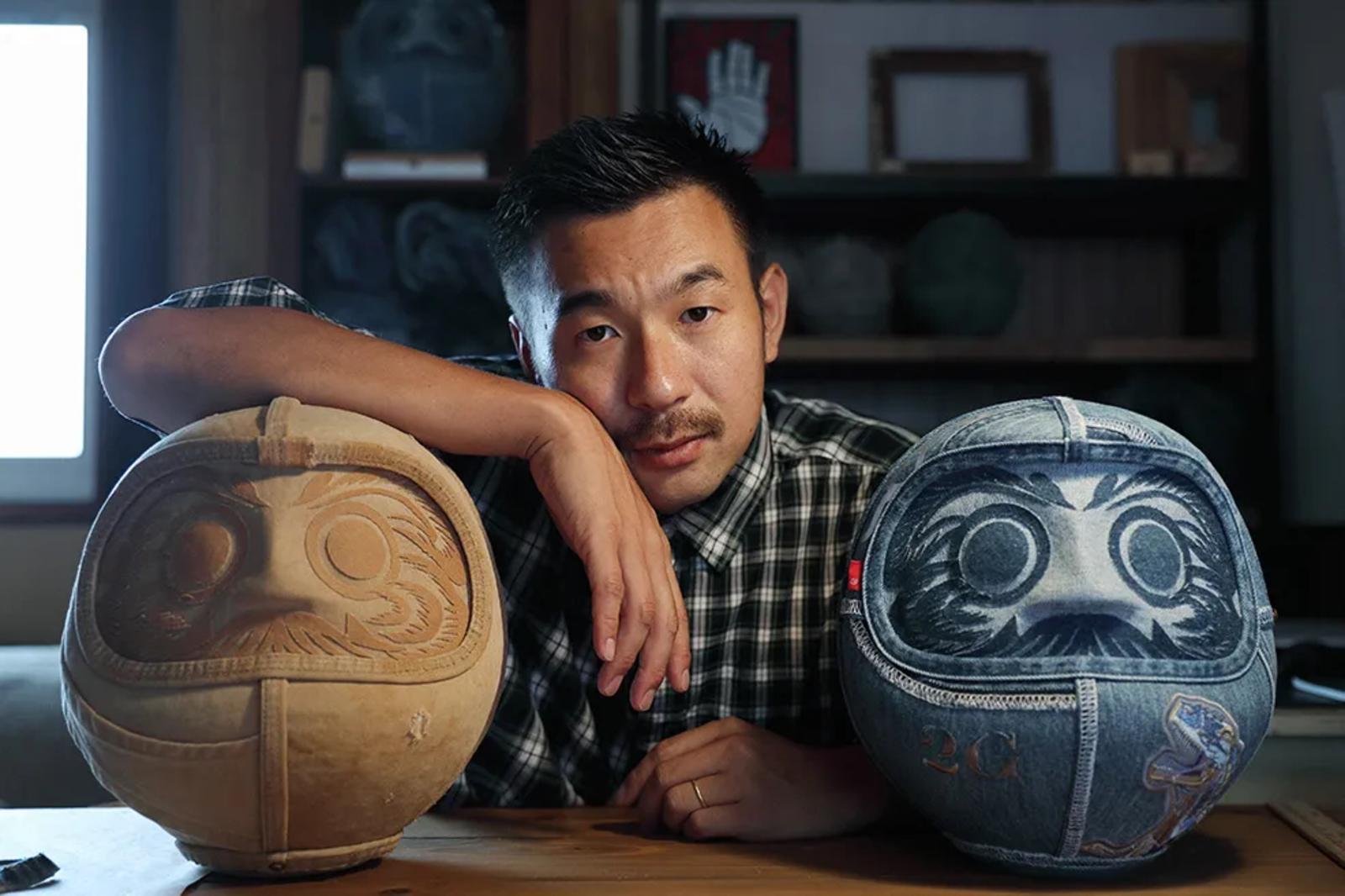
b. 1986, Samukawa, Kanagawa Prefecture, Japan Aoi Shimizu is a contemporary artist whose practice bridges Japanese tradition, street culture, and material reinvention. Before establishing himself in the art world, Shimizu spent his early life immersed in skateboarding, turning professional in his twenties. Known for his technical precision and expressive style, he rode for global brands including Nixon, Reebok, BackChannel, and Murasaki Sports, and appeared on the cover of Transworld Skateboarding Japan. The physicality, repetition, and resilient mindset demanded by skateboarding would eventually shape his identity as an artist. After retiring from professional skating in his late twenties, Shimizu redirected that same discipline toward creative exploration. He began experimenting with stenciling, graffiti, and the visual language of urban culture, but it was a simple, personal revelation that ultimately defined his artistic voice. Shimizu became fascinated by the way denim ages; how each pair of jeans accumulates a unique topography of fades, creases, abrasions, and stains. To him, denim was not disposable fabric but a record of lived experience — memory made visible. This understanding led him to reimagine one of Japan’s most iconic and traditional folk objects: the daruma doll, a symbol of perseverance, renewal, and personal intention. His signature denim daruma sculptures are created by deconstructing discarded jeans and reconstructing them into dimensional forms. Each work is entirely handmade through a labor-intensive process of cutting, layering, shaping, and refining. Rather than paint or pigment, Shimizu allows the natural wear of the denim to provide character, tone, and texture. No two materials, and thus no two daruma, are ever the same. The resulting pieces sit at the intersection of pop culture and traditional spirituality; deeply Japanese in symbolism yet distinctly contemporary in form. They carry echoes of wabi-sabi, street fashion, and the personal history embedded in reclaimed materials. Shimizu often describes his process as meditative — a slow, iterative practice that mirrors the persistence symbolized by the daruma itself. Shimizu has collaborated with notable contemporary figures including Hajime Sorayama, and his work continues to gain recognition for its originality, cultural resonance, and material sensitivity. Beyond denim, he explores “re-art,” the purposeful reuse of surplus or discarded materials such as leather offcuts, elevating them into objects of beauty and memory. Today, Aoi Shimizu stands as a singular voice in contemporary Japanese art, an artist who transforms the everyday into the symbolic, honors tradition while subverting it, and brings the spirit of determination from his skateboarding years into every meticulously constructed piece. His work invites viewers to consider the stories embedded in ordinary materials and the quiet resilience that shapes both objects and people over time.